Preparedness News
Iowa Lead Azide Detonation at 9 a.m. Today: FEMA Urges a Five-Mile Cone at Middletown to Relocate, a Disaster Emergency Covers Three Counties, and Households 5 to 20 Miles Out Are Told to Stay Inside With Supplies Covered
News brief · November 25, 2026 · ReadyStockpile news desk
The U.S. Army will detonate 68 barrels of lead azide, nearly 10,000 pounds of a primary explosive that has been degrading in storage, at the Iowa Army Ammunition Plant in Middletown at 9 a.m. CT today, Wednesday, November 25, the Des Moines Register reported. Acting Secretary of the Army Adam R. Telle said at a news conference on Tuesday, November 24, that there is consensus among experts that a controlled, mitigated detonation is far preferable to an uncontrolled one, USA Today reported. The Federal Emergency Management Agency sent an Imminent Threat Alert to cell phones in the area on Tuesday, CNN reported: the agency will contact residents within 5 miles of the plant to provide evacuation or relocation assistance, and people within 5 to 20 miles are encouraged to stay indoors with their windows closed.
Governor Kim Reynolds issued a proclamation of disaster emergency on Tuesday for Des Moines, Lee and Van Buren Counties, her office announced, activating the state's emergency response plan, and the Iowa Department of Agriculture and Land Stewardship issued updated guidance for livestock producers within 20 miles of Middletown, down to which supplies to move indoors and which to cover with tarps. This is a rare event that uses both halves of household preparedness on the same morning: an evacuation layer for the five-mile cone, and a shelter-in-place layer, with stored food and water protected from dust, for everyone else. Online, the plume is already being described as a poison cloud crossing the Midwest. The confirmed box below is what officials have actually established, and the zones in it, not the social-media version, are the ones to act on.
Confirmed in the reporting
- The event, the material and the hour. The Army is detonating 68 barrels of lead azide, nearly 10,000 pounds, at 9 a.m. CT on Wednesday, November 25, at the Iowa Army Ammunition Plant in Middletown, in southeastern Iowa, the Des Moines Register reported. Lead azide is a primary explosive used to detonate munitions; the barrels have been stored at the plant since 2009, and a more stable compound replaced it in U.S. munitions roughly 15 years ago, Army officials said Tuesday.
- Why the Army says it cannot wait, move it, or treat it. The Army discovered in March that the lead azide had been degrading, CNN reported. ATF Director Robert Cekada said just removing the lid from one of those containers could cause a detonation of that barrel and a sympathetic detonation of every barrel inside either magazine, and crystals on the barrels keep crews from opening them to neutralize the material chemically. The last time the Army conducted a lead azide detonation of this scale was in 1977, said Col. Aaron Teller, commander of the 71st Explosive Ordnance Disposal Group, which is in charge of the controlled explosion.
- The evacuation zone. FEMA officials recommend residents of Middletown and anyone within a five-mile cone southwest of the plant relocate during the planned detonation, until officials give the all clear, the Register reported. Army personnel were going door-to-door in the areas under the evacuation advisory, and emergency alerts have been issued to cell phones within 20 miles of the expected plume path. The Register reported businesses across the affected area posted signs noting closures on Wednesday morning.
- The help on offer for people who leave. FEMA is tasked with handling evacuations and will place people in the affected areas in hotels until Friday, if needed, according to a Lee County Sheriff's Office release reported by the Register. FEMA Administrator Cameron Hamilton said the agency will offer transportation services as well as relocation and food and nourishment for those who choose to relocate, the Washington Examiner reported. For evacuation details, call FEMA at 1-800-621-3362, the Governor's office stated.
- The shelter-in-place zone and its exact steps. Residents 5 to 20 miles southwest of the plant should stay indoors with windows closed to avoid airborne lead dust, noise and vibration, the Governor's office stated. Residents who don't evacuate should close all exterior windows and doors, set their home heating and air to recirculate, turn off exhaust fans, and replace furnace filters with filters rated MERV 11 or higher, the Register reported; USA Today carried the same Army recommendations, adding a new furnace filter rated MERV 11 or higher, if possible, before the detonation.
- Who is told to leave even at the edge of the model. Sean Kaufman, principal deputy assistant secretary for preparedness and response at the Department of Health and Human Services, said Tuesday: “If there are women who are pregnant, children under the age of six, or children in general, and individuals who may have chronic disease, you definitely want to be out of that area. I would evacuate that area. That's signaled in the model,” USA Today and CNN both reported.
- The state response. Governor Reynolds' disaster emergency proclamation for Des Moines, Lee and Van Buren Counties activates the disaster response and recovery aspects of the Iowa Emergency Response Plan and authorizes the use of all available state resources, supplies, equipment and materials, her office announced. Up to 100 federally activated Iowa National Guard Soldiers will support public safety efforts, including community outreach to approximately 150 households identified for the recommended temporary evacuation. Missouri Governor Mike Kehoe activated his state's emergency center on Tuesday, CNN reported.
- The monitoring, in numbers. More than 200 EPA personnel were on site Tuesday night, with a total of more than 300 expected by Wednesday, and the EPA team collected more than 1,200 samples ahead of the blast, including from soil, dust, water and air, CNN reported. The EPA will also conduct active air monitoring during and after the detonation, with mobile laboratories analyzing samples, the Register reported, and samples will be collected before and after. An EPA official said residents can have their home, property or school sampled on request: “If you want your home sampled, your property sampled, your school sampled, you will get that sample,” CNN reported.
- The farm exposure, in numbers. About 350 farms could be affected based on the expected direction of the plume, said Richard Fordyce, under secretary for farm production and conservation at the U.S. Department of Agriculture, CNN reported. The Iowa Department of Agriculture and Land Stewardship's guidance covers producers within 20 miles of Middletown and is itemized in the takeaway below.
- The blast mitigations and the airspace. The concrete storage facilities are already covered in dirt, and officials have added sand barriers around the site along with water and gel blocks to minimize the amount of lead escaping into the air, CNN reported. The Federal Aviation Administration issued a temporary flight restriction in the area surrounding the plant from Tuesday through 12:52 p.m. CT Wednesday.
- The legal path and the delays. The detonation was initially scheduled for November 20 and postponed after public outcry and a lawsuit from environmental groups; a federal appeals court panel lifted a stay on the EPA permit on Monday, and the Army confirmed on Tuesday that it would proceed Wednesday morning, USA Today and CNN reported. Property damage claims can be filed within two years of the detonation through the Army's Ft. Leavenworth, Kansas Claims Office, the Register reported.
Why a controlled blast is the Army's chosen risk
The Army's case, as officials made it on Tuesday, is that every alternative is worse than the blast. The material cannot be trucked away: transporting it again could cause it to accidentally explode, CNN reported. It cannot be opened and neutralized: crystals on the barrels keep crews from opening them to treat the lead azide with a chemical, and removing one lid could set off every barrel in the magazine. And it cannot simply be left: the stockpile was found degrading in March, cold weather could possibly cause it to accidentally explode before a planned detonation, and snow is forecast for the area late Wednesday after temperatures in the 60s over the weekend, Army officials said. Maj. Gen. Eric Shirley put the follow-on risk plainly in USA Today's reporting: an uncontrolled detonation could lead to a series of follow-on detonations that have fewer mitigations.
The mitigations are physical, not rhetorical: dirt already covering the concrete storage facilities, sand barriers added around the site, and water and gel blocks intended to minimize the lead that escapes into the air. Col. Teller's 1977 comparison is the honest scale marker in the story: the Army has not done a lead azide detonation of this size in nearly five decades, which is why the monitoring operation around it, more than 300 EPA personnel expected on site, is as large as it is.
Two zones, two different jobs, and a verification promise
The official geography of this event is two zones with two different jobs. Inside the five-mile cone southwest of the plant, the job is leaving: FEMA handles the evacuation, hotels run through Friday if needed, and the households singled out by name, pregnant women, young children, people with chronic disease, are told by HHS to be out of the modeled area. Between 5 and 20 miles southwest, the job is sealing the house: windows and doors closed, heating and air on recirculate, exhaust fans off, a MERV 11 or better furnace filter in place, and then, after officials end the air exposure period, wet-cleaning the surfaces dust settles on, children's play surfaces, toys, tables and chairs, handrails, patios and decks, windowsills and cars, per the Army recommendations USA Today published.
The verification layer is what separates this event from a rumor cycle. The EPA collected its baseline before the blast, more than 1,200 samples across soil, dust, water and air, will monitor the air during and after with mobile laboratories, and has told residents that sampling of their own home, property or school is available on request. Purdue environmental engineering professor Andrew Whelton, who worked the East Palestine derailment aftermath, told CNN the right demand is clarity on who decides when it is safe to return and on what information. The Army has also published how to submit a property damage claim, and Iowa's agriculture department tells producers to track and record every expense in case a claim follows. Households in the zones should do the same: photographs and receipts are the household version of a baseline sample.
What officials actually tell households
Underneath the event-specific guidance sits the standing federal floor, unchanged by this story. Ready.gov, FEMA's public preparedness site, recommends supplies of food and water for at least several days, at one gallon of water per person per day for drinking and sanitation. FEMA and the American Red Cross go further in their joint booklet, Food and Water in an Emergency, which recommends building up to a two-week supply of food and water at home. The Red Cross states the split plainly: a 3-day supply for evacuation, a 2-week supply for home.
Middletown is that split running on a real clock. The alert arrived Tuesday; the detonation is 9 a.m. Wednesday. The households inside the cone who already owned the 3-day evacuation layer spent Tuesday driving to a hotel FEMA is paying for. The households in the 5-to-20-mile ring who already owned the home layer spent Tuesday on filters and window latches. Nobody in either zone had time to build a stockpile on Tuesday, which is the entire argument for building it on an ordinary week instead.
What this means for your stockpile
The useful lesson of this morning is that the two official zones map exactly onto the two layers this site builds: a 3-day layer you can carry out the door, and a home layer that lets you seal the house and wait. Here is the event translated into household numbers.
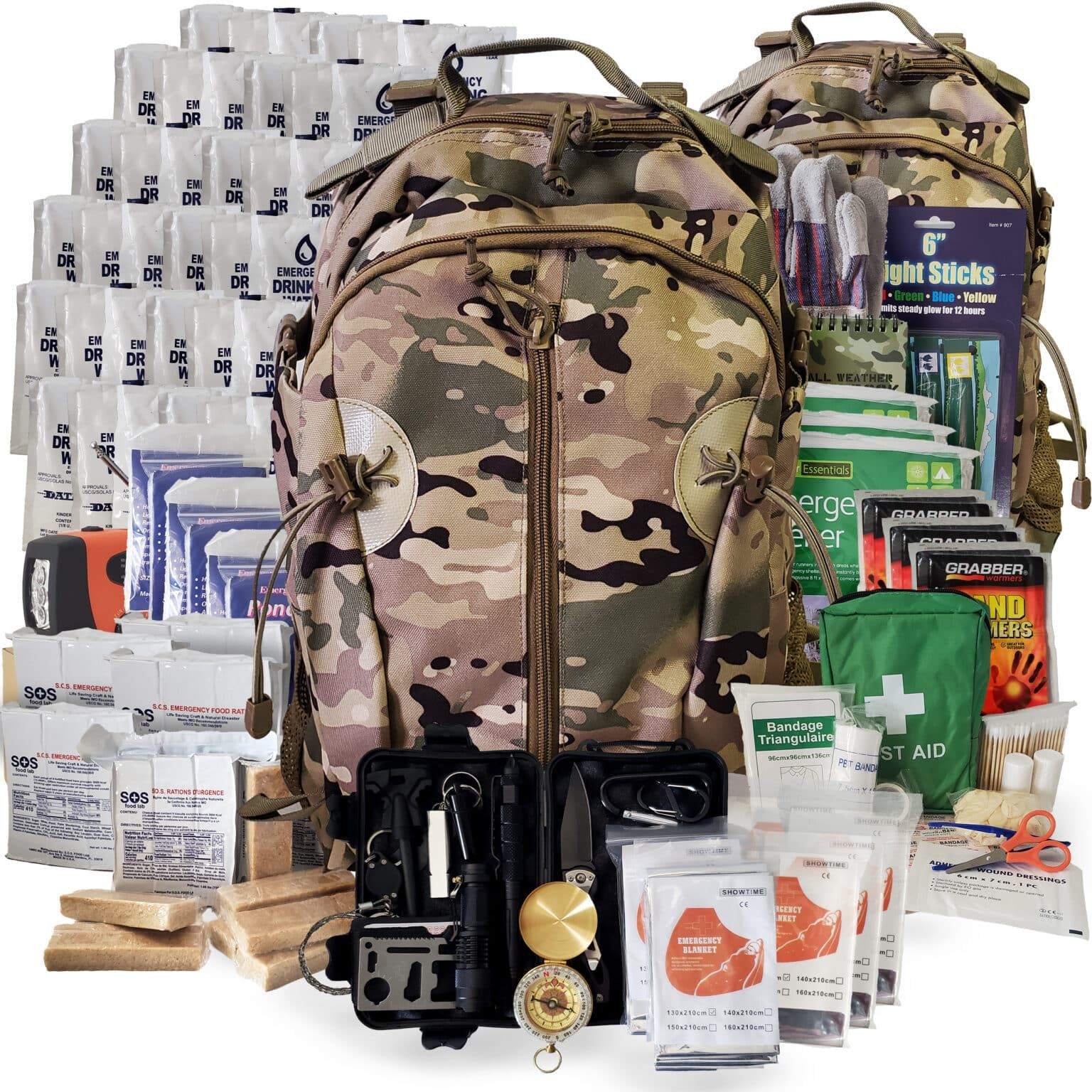
- If you are in the five-mile cone: leave before 9 a.m. with the evacuation layer, and let FEMA carry the logistics. Transportation, food and hotel stays through Friday are on offer at 1-800-621-3362. The bag itself is the Red Cross 3-day supply: water at one gallon per person per day, 12 gallons for a family of four over 3 days, food at the site's planning figure of about 2,000 calories per adult per day, daily medicines, phone charging, and pet supplies. Pregnant women, children and anyone with a chronic condition are the people HHS names to be out of the modeled area, full stop.
- If you are 5 to 20 miles southwest: run the Army's sealing checklist before 9 a.m., not after. Exterior windows and doors closed, heating and air set to recirculate, exhaust fans off, and a furnace filter rated MERV 11 or higher in place. Then stay inside until officials give the all clear; Iowa's agriculture department notes it may take several hours for the dust particles to settle.
- Protect the stockpile itself, the step most checklists skip. The agriculture department's logic for farms is the household logic too: feed, hay and portable water tanks move indoors or get covered with a tarp, because dust settles on whatever is outside. Bring in or cover stored water containers, pet bowls, garden produce and children's outdoor toys and play equipment before the plume passes, and keep livestock and pets off ponds and creeks; Iowa State University Extension and the Iowa Beef Center advised producers to water livestock from tanks instead, as the Register's reporting carried by USA Today described.
- After the all clear, clean wet, not dry. The Army's list is specific: wet-clean children's play surfaces, toys, tables and chairs, handrails, patios and decks, windowsills and cars once officials end the air exposure period. Iowa's guidance to producers adds the farm version: power wash the outside of barns and buildings, fencing, feeders and portable water tanks after the dust settles, and wash your hands thoroughly after wiping down equipment.
- Use the verification that is on offer, and keep your own records. The EPA will sample a home, property or school on request, and its 1,200-plus baseline samples were taken before the blast for exactly this comparison. Producers are told to ask the Army for baseline and post-blast soil and forage samples and to track every expense; claims go to the Army's Office of the Staff Judge Advocate at Fort Leavenworth, and the Register reports claims can be filed within two years of the detonation. Photograph your property before and after, and keep receipts.
- Everywhere else, treat this as the drill it is. FEMA's alert gave Middletown roughly a day. The households that coped best are the ones whose 3-day bag was already packed and whose home already held the two-week layer, 14 gallons of water per person and two weeks of food the household actually eats. Build both on a quiet week: the calculators below turn your household into the exact gallons and calories.
- Bug-Out Bag Checklist: the tickable 72-hour bag, built for a leave-now morning
- Water Storage Calculator: turn your household into exact gallons, barrels, and jugs
- Scenario Checklists: tickable lists for evacuation, grid-down, and winter storm
Sources for this brief
Reporting, as published by the outlets named:
- Des Moines Register, “Iowans wary of lead plume's impact ahead of detonation,” November 24, 2026. The 68 barrels and nearly 10,000 pounds, the five-mile cone and the MERV 11 guidance, FEMA hotel placement through Friday, alerts to phones within 20 miles, EPA sampling before and after, and the two-year claims window through Fort Leavenworth.
- USA Today, “Detonation of lead azide is on; residents should evacuate, Army says,” November 24, 2026. Telle's consensus statement, the HHS evacuation advice for pregnant women, children and people with chronic disease, the delay history, the Army's stay-indoors and wet-cleaning recommendations, and the Iowa State Extension livestock advice.
- Washington Examiner, “FEMA urges evacuation of Iowa blast zone as National Guard moves in,” November 24, 2026. FEMA Administrator Hamilton's offer of transportation, relocation, food and nourishment, hotels through Friday with extensions on request, and the wet-wipe guidance after the detonation.
- CNN, “Army details plan to contain lead dust ahead of Wednesday detonation in Iowa,” November 24, 2026. The FEMA Imminent Threat Alert, the March degradation discovery and the lid warning, the sand, water and gel mitigations, the 1977 comparison, more than 200 EPA personnel and 1,200 samples, the roughly 350 farms, and the FAA flight restriction.
Official guidance cited:
- Office of the Governor of Iowa, “Gov. Reynolds issues disaster emergency proclamation, provides pre-detonation update,” November 24, 2026 (disaster emergency for Des Moines, Lee and Van Buren Counties; FEMA evacuation and stay-indoors zones; 1-800-621-3362; up to 100 National Guard Soldiers and roughly 150 households)
- Iowa Department of Agriculture and Land Stewardship, “Updates Guidance for Livestock Producers Located Near Middletown,” November 24, 2026 (the 20-mile producer checklist: baseline samples, livestock indoors, feed and water tanks indoors or tarped, power washing after, expense records, and the Fort Leavenworth claims address)
- Ready.gov (FEMA), Build a Kit
- Ready.gov (FEMA), Food
- CDC, How to Create an Emergency Water Supply
Reporting above is attributed to the outlets named, and official figures are checked against Ready.gov, FEMA, CDC, and Red Cross publications. Last verified: November 29, 2026. If an official source ever disagrees with us, the official source wins.
Reader comments
No comments yet. Yours could be the first; every comment is read by a person before it appears here.